




Join Destination Experts Pilar and Hayley on an unforgettable journey through Sri Lanka, where ancient temples, incredible wildlife, rolling tea country, and rich cultural traditions come together in one remarkable island. From exploring the Cultural Triangle and searching for leopards in Yala National Park to hiking through the Central Highlands and connecting with local communities, their journey showcases the incredible diversity of Sri Lanka.
Hi everyone, Destination Experts Pilar and Hayley here! We recently had the opportunity to explore Sri Lanka, and we’re excited to share some of our favorite moments from the journey. From ancient UNESCO World Heritage Sites and wildlife-filled safaris to tea plantations, local traditions, and unforgettable meals, each day revealed a different side of the country. Come along as we take you through our Sri Lankan adventure!
Welcome to Sri Lanka
Section Type: standardWidthImageS
Starting off our Sri Lankan adventure (Photo: Hayley Ward).
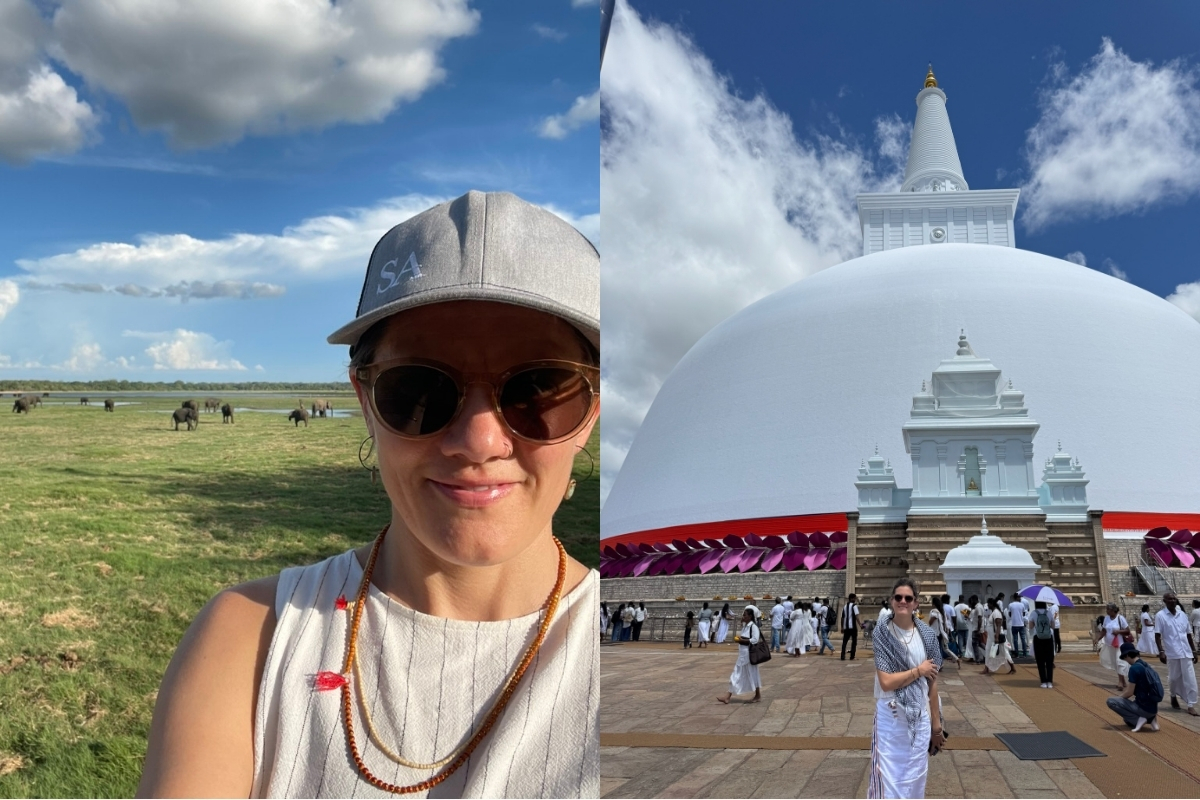
Ayubowan from Sri Lanka, Destination Expert Hayley here!
My colleague Pilar and I are kicking off an unforgettable journey through one of the world’s most diverse destinations. Ayubowan is the traditional greeting used throughout Sri Lanka, meaning “I wish you a long life”—a beautiful reflection of the warmth, hospitality, and spirit we’ve already begun to experience here.
Sri Lanka has long flown under the radar, often overlooked in favor of its larger neighbors, but after experiencing it firsthand, I can confidently say it completely surpassed my expectations. From ancient cultural sites and incredible wildlife to warm hospitality and unforgettable food, it packs an incredible diversity of experiences into one compact island, making it one of the most meaningful destinations I’ve had the chance to explore. It’s one of those rare places that leaves a lasting impression long after you’ve returned home.
Upon arrival in Colombo, I was met at the gate and escorted through expedited immigration before relaxing in a comfortable lounge while my luggage was collected. After a restful night’s sleep, we boarded a 45-minute scenic charter flight to Sigiriya, enjoying spectacular aerial views of the island as we made our way to Sri Lanka’s Cultural Triangle.
Our first stop was Polonnaruwa, a UNESCO World Heritage Site and Sri Lanka’s second ancient capital, where centuries-old temples, stupas, and impressive stone carvings offer a fascinating glimpse into the island’s rich history and deep Buddhist roots.
After a delicious local lunch of traditional Sri Lankan curry and rice, we headed out on a jeep safari in Minneriya National Park, famous for its large herds of wild Asian elephants. Watching these majestic animals roam freely and gather together in the grasslands of their natural habitat was a truly magical experience and the perfect introduction to Sri Lanka’s incredible wildlife.
A Deeper Look at Life in Sigiriya
Section Type: standardWidthImageS
Destination Experts Pilar & Hayley exploring Sigiriya (Photo: Hayley Ward).
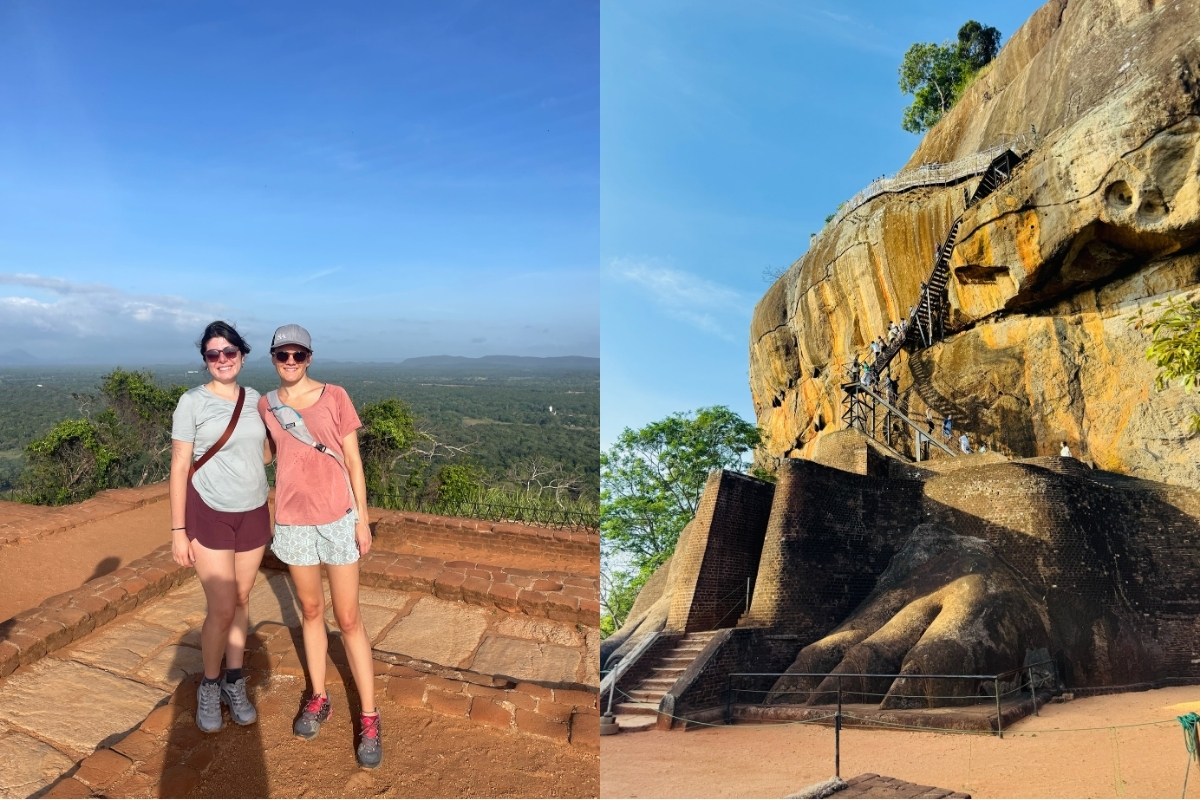
Today was a perfect blend of adventure, culture, and meaningful local connections. We started the morning with a climb to the top of the iconic Sigiriya Rock Fortress, one of Sri Lanka's most popular landmarks and a UNESCO World Heritage Site. Rising nearly 660 feet above the surrounding jungle, this ancient royal citadel dates back to the 5th century. The climb is well worth the effort, with breathtaking panoramic views, impressive ancient engineering, and a fascinating history that brings Sri Lanka's past to life.
From there, we visited a rural village school, where we spent time with the students and gained a glimpse into everyday life beyond the country's main tourist sites. We learned that education in Sri Lanka is free for all students, including uniforms and a meal at school.
Later, we had the privilege of participating in an almsgiving ceremony at a local Buddhist temple, offering food to the monks as part of a centuries-old tradition. In the Buddhist monastic tradition, monks rely on food offered to them by others. It was a humbling experience that provided a deeper understanding of Sri Lanka's culture and spiritual heritage. We learned that nearly 75% of the population practices Buddhism, a faith introduced to Sri Lanka from India more than 2,000 years ago. Throughout our journey, I couldn't help but notice how its teachings seem to be reflected in the humility, kindness, and genuine hospitality of the people we met.
We ended the day back at Water Garden Sigiriya, relaxing by the pool and taking in the peaceful surroundings after an unforgettable day.
Sacred Caves, Spices & Kandy
Section Type: standardWidthImageS
Journeying from Sigiriya to Kandy, Sri Lanka (Photo: Hayley Ward).
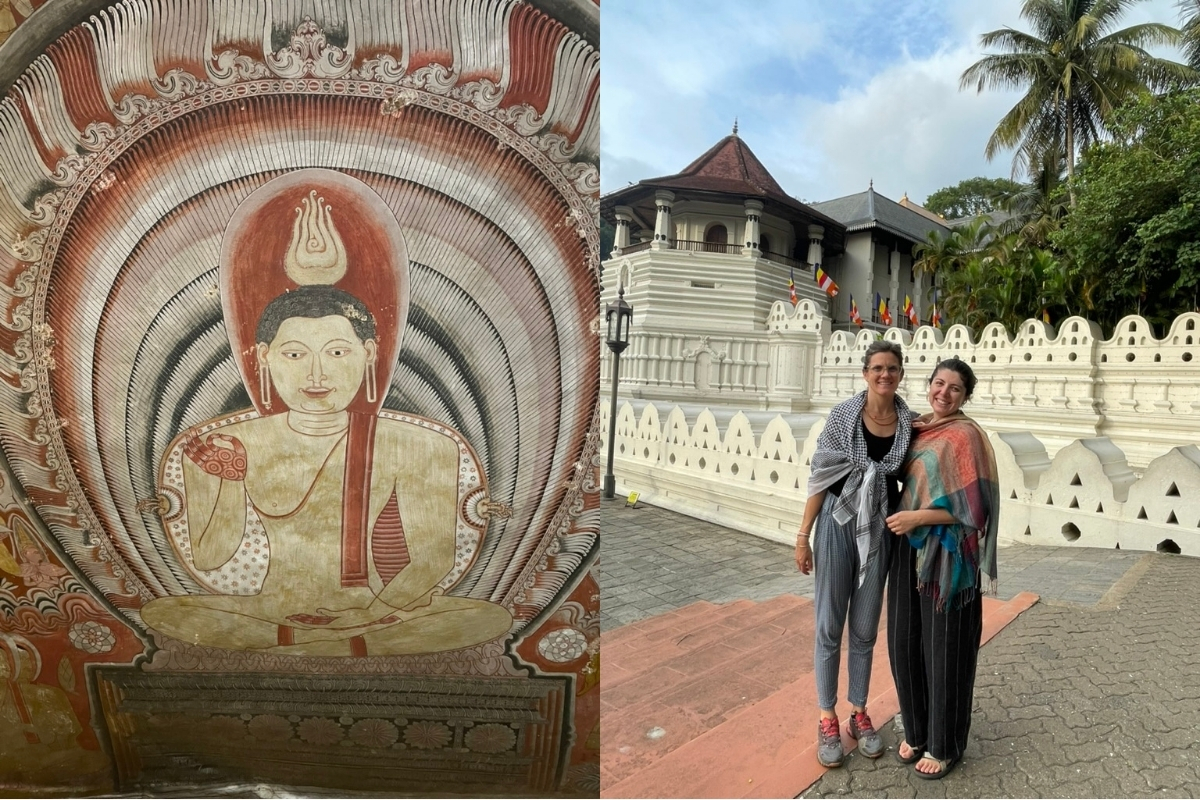
Another spectacular day as we journeyed from Sigiriya to Kandy, discovering some of Sri Lanka's most iconic cultural and natural treasures along the way.
Our first stop was the remarkable Dambulla Cave Temple, another UNESCO World Heritage Site and the largest, best-preserved cave temple complex in Sri Lanka. Around 2,100 years ago, King Valagamba donated these caves to Buddhist monks in gratitude for the refuge they provided him while he was in exile following a South Indian invasion. Upon regaining his throne, he transformed the caves into a sacred monastery.
What makes this site so extraordinary is that the temple is built within a series of natural caves, with Buddha statues and shrines carved directly into the rock. Combined with the vibrant murals covering the cave ceilings and walls, the setting creates an incredibly peaceful and awe-inspiring atmosphere. Of all the places we've visited so far, Dambulla left the biggest impression on me. There was something incredibly special about the serenity of the caves and the devotion that has filled this sacred place for centuries.
We then stopped at a local spice farm, where we learned about Sri Lanka's world-famous cinnamon, pepper, cardamom, and other spices, as well as their traditional culinary and medicinal uses. Our guide, Selva, was a very special character who made our experience truly one of a kind and unforgettable! The people of Sri Lanka continue to welcome us with incredible warmth, generously sharing their traditions, stories, and hospitality along the way.
After arriving in Kandy, the last royal capital of Sri Lanka, we enjoyed a peaceful hike through Udawatte Kele Forest Reserve, a lush rainforest sanctuary overlooking the city. We ended the day at the sacred Temple of the Tooth Relic, home to one of Buddhism's most revered relics and an important pilgrimage site for Buddhists from around the world.
Alongside local worshippers, we joined in the tradition of offering fresh lotus flowers as a symbol of devotion, gratitude, and the impermanence of life. It was a beautiful and humbling experience to witness the deep faith of those who had traveled from across Sri Lanka to pay their respects, offering a meaningful glimpse into the country's rich spiritual heritage.
A Day of Art, Food & Local Traditions
Section Type: standardWidthImageS
Visiting the home studio of a local batik artist, Chandani (Photo: Hayley Ward).
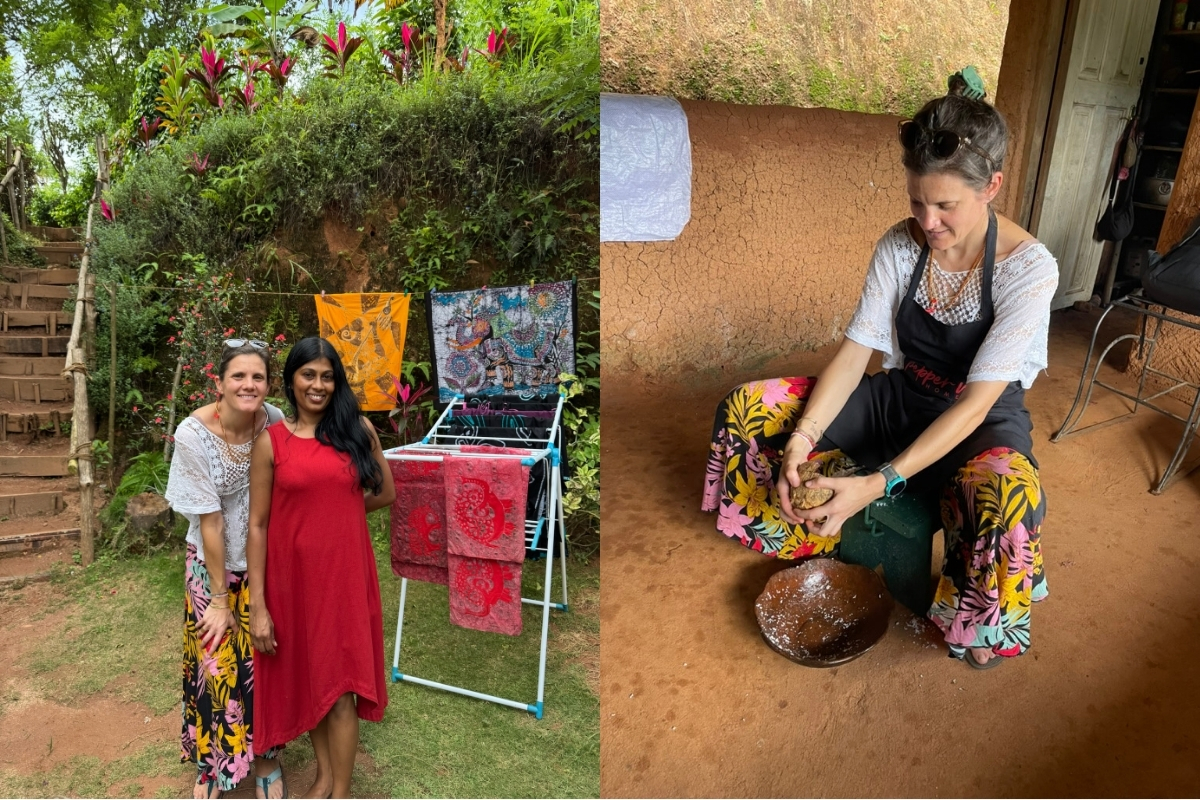
One of my favorite parts of traveling is meeting local people and experiencing traditions that have been lovingly passed down through generations. Our day was filled with meaningful cultural encounters, beginning with a visit to the home studio of local batik artist Chandani, where we learned about this beautiful centuries-old textile craft.
We had the opportunity to get hands-on with the process, discovering how intricate designs are created through careful wax application before the fabric is dyed to bring the patterns to life. Chandani shared the skill and artistry behind this tradition, which fewer than 500 people across Sri Lanka continue to preserve and practice. She ended the experience by welcoming us into her home for homemade Sri Lankan snacks and tea. We sat together, shared stories, and learned about each other’s lives—a beautiful reminder that some of the most meaningful travel moments come through genuine human connection.
We then headed to the local market to select fresh ingredients for a hands-on cooking experience with Chami and his family. Together, we prepared and shared an authentic Sri Lankan meal over an open-fire stove, learning traditional techniques while enjoying plenty of chopping, cooking, and laughter along the way. It was a joyful and memorable experience, and easily one of my favorite meals of the entire trip!
In the afternoon, we met skilled brass artisans in Pilimathalawa and explored the inspiring Sooriyakantha Centre for Arts & Culture, gaining a deeper appreciation for Sri Lanka’s creativity and artistic traditions.
On our way back to the hotel, we had the unexpected privilege of witnessing a local street parade celebrating the full moon and honoring the monk who first introduced Buddhism to Sri Lanka. I love when spontaneous moments like these unfold while traveling, as they often become some of the most memorable parts of the journey.
Into Sri Lanka’s Tea Country
Section Type: standardWidthImageS
Spending the day in Sri Lanka’s famous tea-growing region (Photo: Hayley Ward).
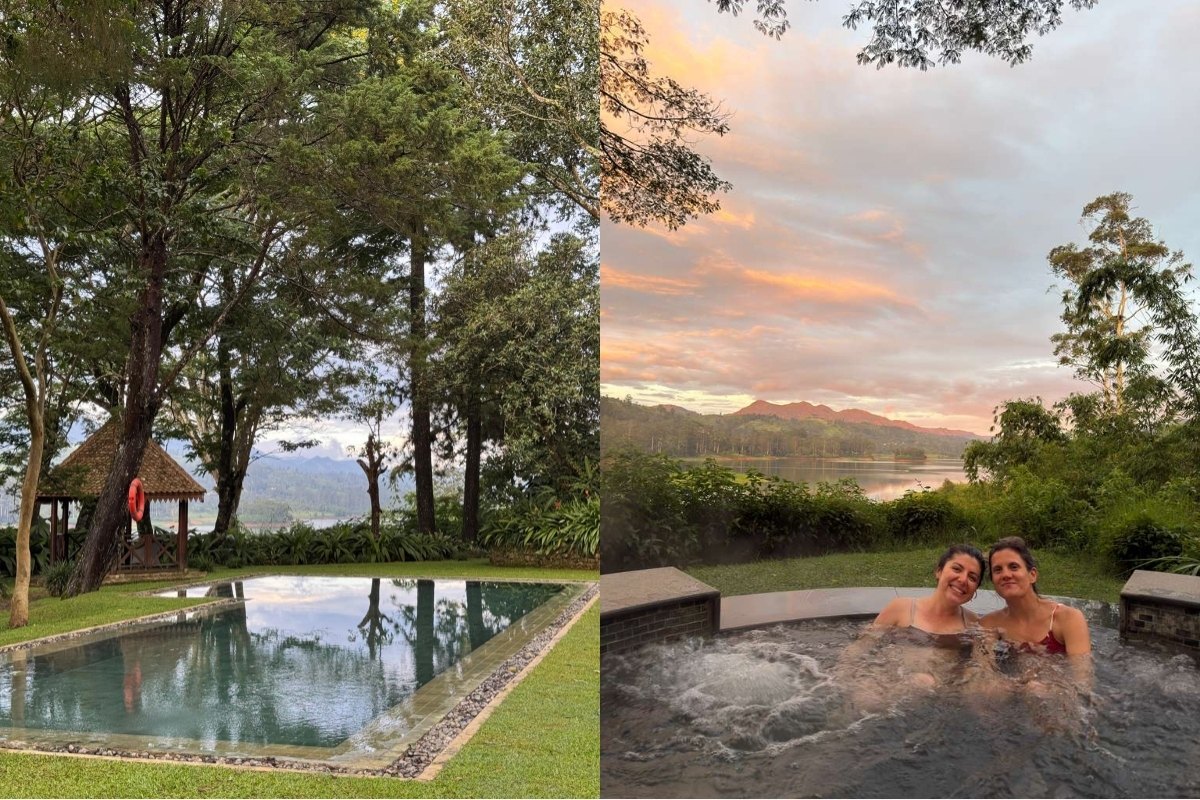
This morning, we explored the lush Royal Botanical Gardens in Peradeniya, wandering through beautifully landscaped grounds filled with tropical plants, vibrant orchids, towering palms, and impressive botanical collections. The gardens offered a peaceful introduction to Sri Lanka’s incredible biodiversity and the country’s deep connection with nature before we continued our journey into the mountains.
We traveled through Sri Lanka’s breathtaking hill country, following winding roads through misty mountains, lush valleys, and endless tea plantations. Around every corner, the landscape revealed another postcard-worthy scene—emerald-green tea fields stretching across rolling hills, waterfalls cascading through the forests, and small villages tucked into the valleys below. Our journey brought us to Ceylon Tea Trails, a remarkable retreat nestled in the heart of Sri Lanka’s famous tea-growing region.
The property is composed of five beautifully restored tea planter bungalows, originally built in the early 1900s as homes for those who managed the nearby tea estates. Today, these historic residences have been thoughtfully preserved, maintaining their original character while offering an intimate and comfortable retreat in nature. Each has its own unique charm, with cozy living spaces, elegant details, and sweeping views of the tea-covered hills and waterways.
Upon arrival, we were welcomed by the incredibly warm and friendly staff, who immediately made us feel at home. Our bungalow overlooked the peaceful waters of the Castlereagh Reservoir, with spectacular mountain views and a magical sunset that seemed to transform the entire landscape. The combination of history, hospitality, and breathtaking scenery made this place truly unforgettable.
Every destination we visited was special, yet somehow, each new arrival quickly became my new favorite.
Hiking the Pekoe Trail
Section Type: standardWidthImageS
Hiking the Pekoe Trail in Sri Lanka (Photo: Hayley Ward).
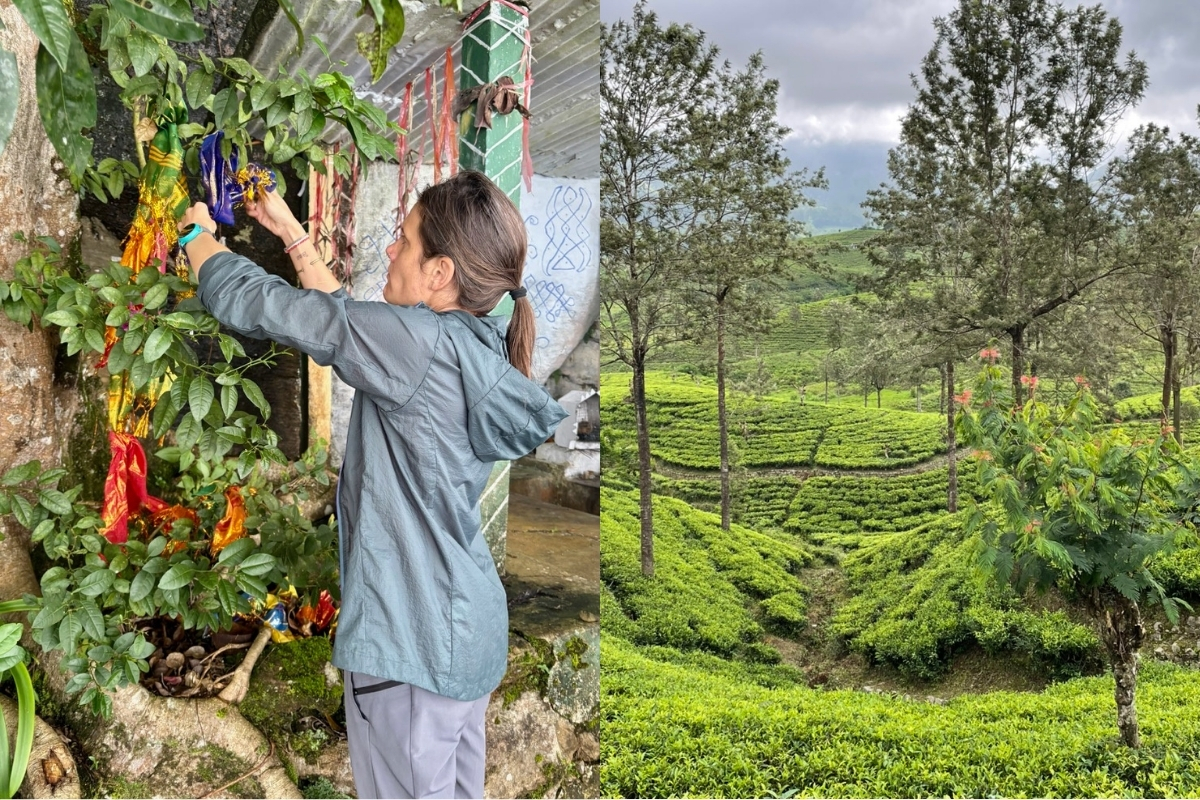
Today, we stepped into the heart of Sri Lanka’s tea country for a truly special experience on Stage 8 of the Pekoe Trail. We had the rare privilege of hiking alongside the founder of the project, who shared the inspiration and vision behind creating this 300-kilometer trail.
The Pekoe Trail connects the landscapes and communities of the highlands through a blend of historic tea estate paths and natural trails, winding through lush plantations, mountain passes, forests, and alongside rivers. Beyond the breathtaking scenery, we learned about the project’s thoughtful approach to sustainable tourism, utilizing existing infrastructure and pathways while creating meaningful opportunities for local communities. The trail reflects a careful balance between supporting the local economy, protecting the environment, and respecting the people who have shaped this region.
Along the way, we paused at a small Hindu shrine to leave a simple offering and connect with the spirituality of the area. Many people in Sri Lanka’s tea country are descendants of Tamil workers who migrated from India over generations to work on the tea estates, bringing with them their traditions, faith, and cultural heritage. These small moments offered a deeper connection to the people and history woven into the landscape.
Hiking the Pekoe Trail was not only a journey through some of Sri Lanka’s most beautiful scenery but also an opportunity to better understand how responsible tourism can honor nature, culture, and local communities. It was a truly memorable way to experience the heart of the hill country.
And with that, I’ll hand things over to Pilar to share what came next on our Sri Lankan adventure!
From Tea Country to Yala National Park
Section Type: standardWidthImageS
Destination Expert Pilar at the Dunkeld Tea Factory (Photo: Pilar Ceniceroz).
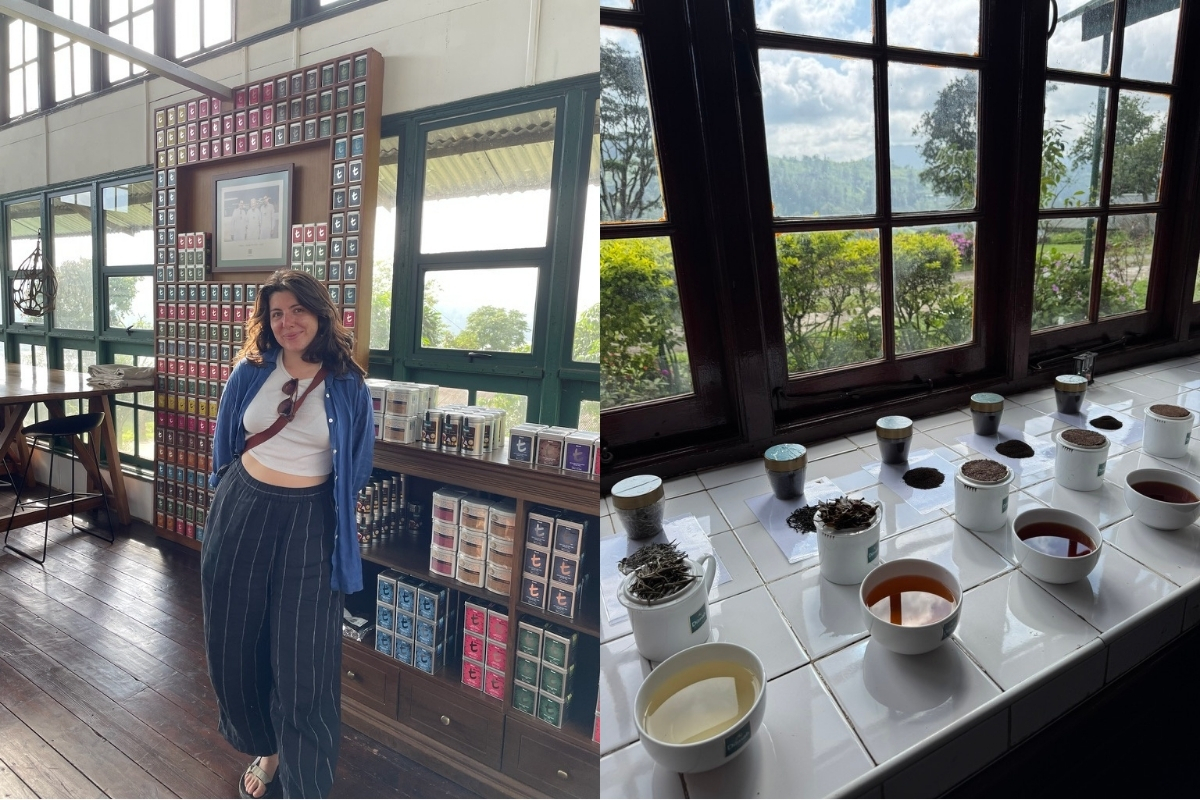
SA Explorer Pilar here! Join me as I explore Sri Lanka!
We woke up to beautiful views of Sri Lanka’s UNESCO-listed Central Highlands. This area is known for its emerald-green tea plantations, misty peaks, and rich biodiversity, with the higher elevations even home to leopards! We started our day with a tour of the Dunkeld Tea Factory to learn how tea is made.
One of the most fascinating things I learned at the Dunkeld Tea Factory is that every type of tea—white, green, black, and even matcha—comes from the very same plant. The difference lies entirely in how the leaves are processed after they’re picked.
White and green teas are kept fresh by preventing oxidation, while black tea is made by gently bruising the leaves, allowing them to naturally oxidize and develop their rich color and bold flavor. Matcha is created by heating the leaves to stop oxidation before they’re finely ground into a vibrant green powder.
Next, we watched our amphibious aircraft land on the beautiful Castlereagh Reservoir, ready to take us to Yala National Park! We soared above the tea-covered hills, waving goodbye to the cool air of the Central Highlands.
We arrived at the Tented Lodge and were greeted by friendly grey langurs! Because the 30-minute flight saved us nearly five hours of driving, we were able to head out on an afternoon safari.
We set off in search of the park’s incredible wildlife. While leopards and elephants were nowhere to be seen that afternoon, we were treated to sightings of spotted deer, crocodiles basking along the water’s edge, and a wild boar. We also spotted an array of birdlife, including the vibrant green bee-eater and the striking painted stork, offering a wonderful introduction to the rich biodiversity that makes Yala so special.
On Safari in Yala National Park
Section Type: standardWidthImageS
Yala National Park, Sri Lanka (Photo: Pilar Ceniceroz).
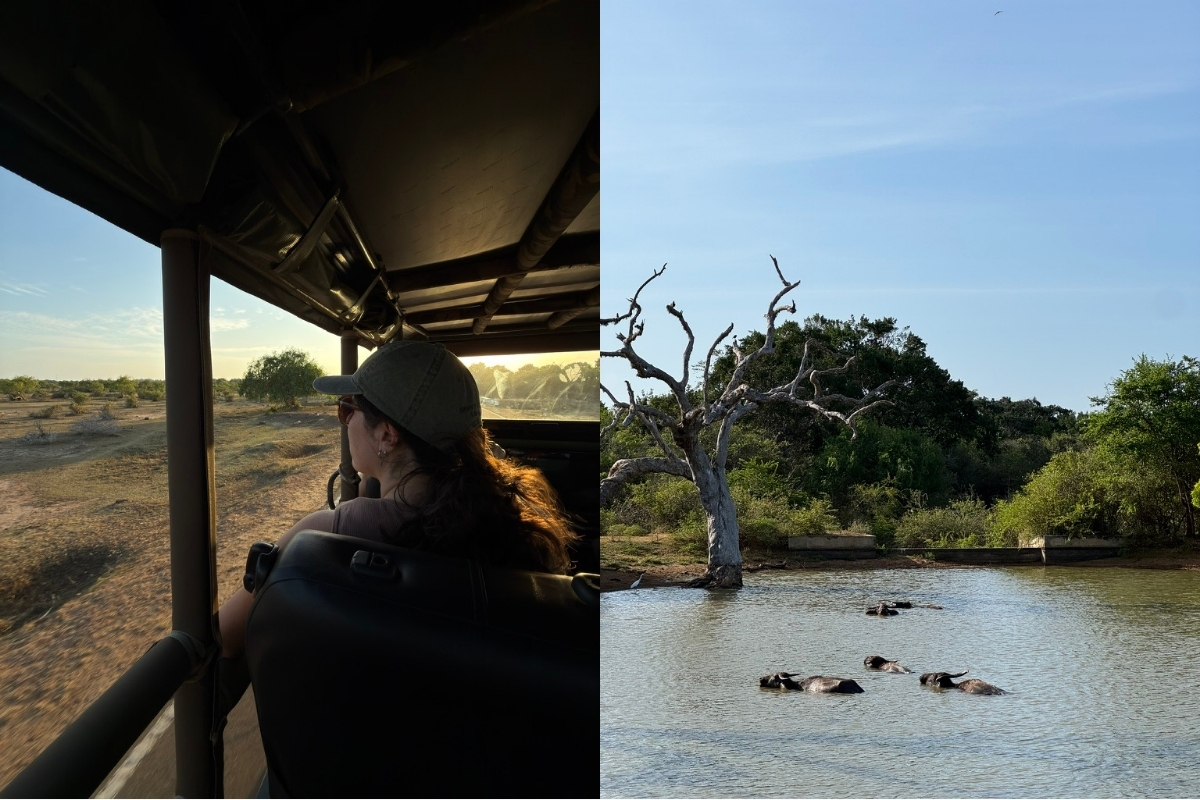
We set out at sunrise in our 4x4 jeep with one goal in mind: spotting a leopard. Not long into our game drive, we were lucky enough to spot two young leopard brothers, just under a year old. Our guide also shared just how challenging life can be for the park’s wildlife. Leopard cubs don’t open their eyes until around 10 days after birth, and nearly 80% don’t survive their first year, which is why researchers typically don’t name them until they reach one year old. Similarly, crocodiles can lay up to 50 eggs at a time, yet often only a single hatchling survives to adulthood.
We watched elephants grazing in the grasslands, a Bengal monitor digging for its next meal, water buffalo cooling off in the wetlands, a hornbill perched high in the trees, and numerous curious mongooses darting through the brush. We learned that locals often welcome mongooses into their gardens because they help keep snakes and other pests under control. I know I’d be happy to share my yard with a mongoose!
As we continued exploring Yala, we gained a deeper appreciation for just how diverse the park is. Yala is Sri Lanka’s oldest national park and one of its most diverse. Uniquely located along the coast of the Indian Ocean, it brings together forests, grasslands, wetlands, and beaches within a single protected landscape. With such a wide range of habitats, it’s no surprise that Sri Lanka is home to 34 endemic bird species. Every corner of the park seemed to reveal something different.
My most memorable takeaway from the day was that conservation and tourism go hand in hand. As Yala creates jobs and supports local communities, it also gives local people a strong incentive to protect the wildlife and habitats that make this place so special. It’s a powerful example of how tourism can help ensure these incredible species continue to thrive for generations to come.
Cinnamon, Stilt Fishing & Galle Fort
Section Type: standardWidthImageS
Stilt fishing and a visit to a local cinnamon farm (Photo: Pilar Ceniceroz).
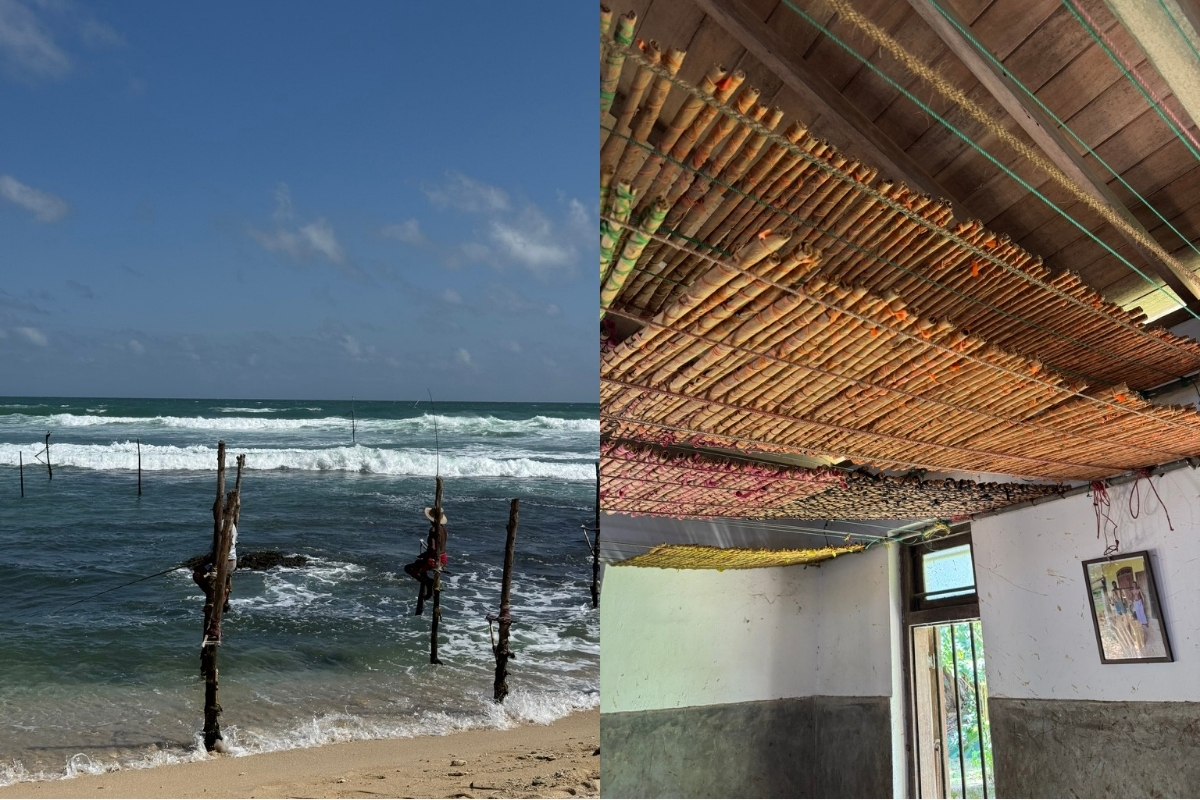
This morning, we waved goodbye to Yala National Park and departed for the southeast coast.
Our first stop was a local cinnamon farm, where I learned far more about cinnamon than I ever expected. Sri Lanka is famous for producing true Ceylon cinnamon, which is softer, lighter in color, and much more delicate than cassia, the lower-quality variety commonly sold in supermarkets around the world. We watched the entire process, from carefully peeling back the outer bark to reveal the precious inner layer to rolling it to release the natural oils and tying the quills together to dry. I also learned that the trees are cut back rather than uprooted, allowing new shoots to grow from the same stump and making cinnamon a surprisingly sustainable crop.
The locals even use cinnamon oil as a natural insect repellent!
After lunch, we continued along the coast to observe one of Sri Lanka’s traditional fishing methods: stilt fishing. Unique to the country, this tradition began after the Second World War out of economic necessity and limited access to boats, but it has since become one of Sri Lanka’s most recognizable images. Today, it’s kept alive largely through tourism, as stilt fishing alone is no longer enough to make a living.
The afternoon was spent exploring Galle Fort and hearing about its history from a local resident! The fort has changed hands between the Portuguese, Dutch, and British over the centuries, and today, it’s still very much a living community. Around 500 people call the fort home, with cafés, restaurants, schools, homes, and even a courthouse tucked inside its historic walls. Walking its streets and learning about its coral-built walls, it was easy to see why it’s one of Sri Lanka’s most treasured UNESCO World Heritage Sites.
We wrapped up the day with an arrack tasting. Arrack, Sri Lanka’s national spirit, is distilled from the sap of coconut flowers and has a smooth, slightly sweet flavor unlike anything I’d tried before. Today was one of those days that perfectly captured the diversity of experiences Sri Lanka has to offer. From traditional craftsmanship and local culture to centuries of history and incredible food and drink, Sri Lanka offers something special for all types of travelers!
Elephant Rescue & Sri Lankan Traditions
Section Type: standardWidthImageS
Visiting the Elephant Transit Home in Udawalawe and trying Sri Lanka’s traditional pottery (Photo: Pilar Ceniceroz).
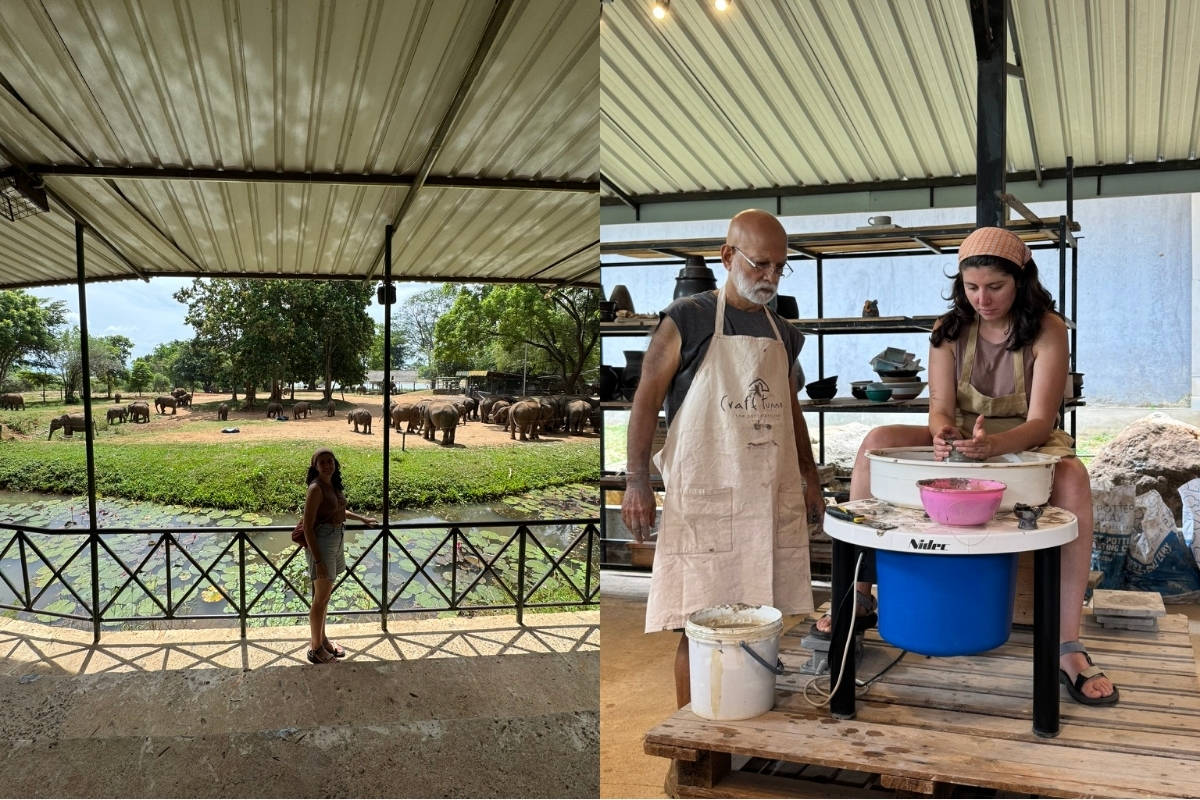
Our first stop today was the Elephant Transit Home in Udawalawe, a rehabilitation center dedicated to caring for orphaned elephant calves before releasing them back into the wild.
What makes this place so special is that it isn’t a zoo or a traditional sanctuary. It’s directly connected to Udawalawe National Park, with no barriers preventing the elephants from returning to their natural habitat once they’re old enough to survive on their own. The goal here is rehabilitation, not lifelong captivity.
It was heartbreaking to learn why so many calves end up here in the first place. Many lose their mothers due to human-wildlife conflict, while others become trapped in abandoned farming wells or are injured near railway tracks. Thankfully, Sri Lanka has invested heavily in elephant rescue efforts over the years. We even learned about the country’s specialized elephant ambulances, designed to safely transport injured or orphaned elephants for treatment and rehabilitation.
My favorite fact from the day was that when authorities stop trucks for traffic violations, drivers may be given a choice: face legal penalties or help transport a young elephant to the Transit Home!
After spending the morning with the elephants, we continued to the Craft Tunnel for lunch and a pottery demonstration with a local master potter. Sri Lanka’s traditional pottery is a timeless craft, shaped by hand from local clay and passed down through generations for more than 2,000 years. It was a lovely change of pace to watch these centuries-old techniques in action and even try my hand at throwing clay myself. We ended the day with a refreshing dip in the Indian Ocean.
A Final Day in Colombo
Section Type: standardWidthImageS
Saying goodbye to Sri Lanka (Photo: Pilar Ceniceroz).
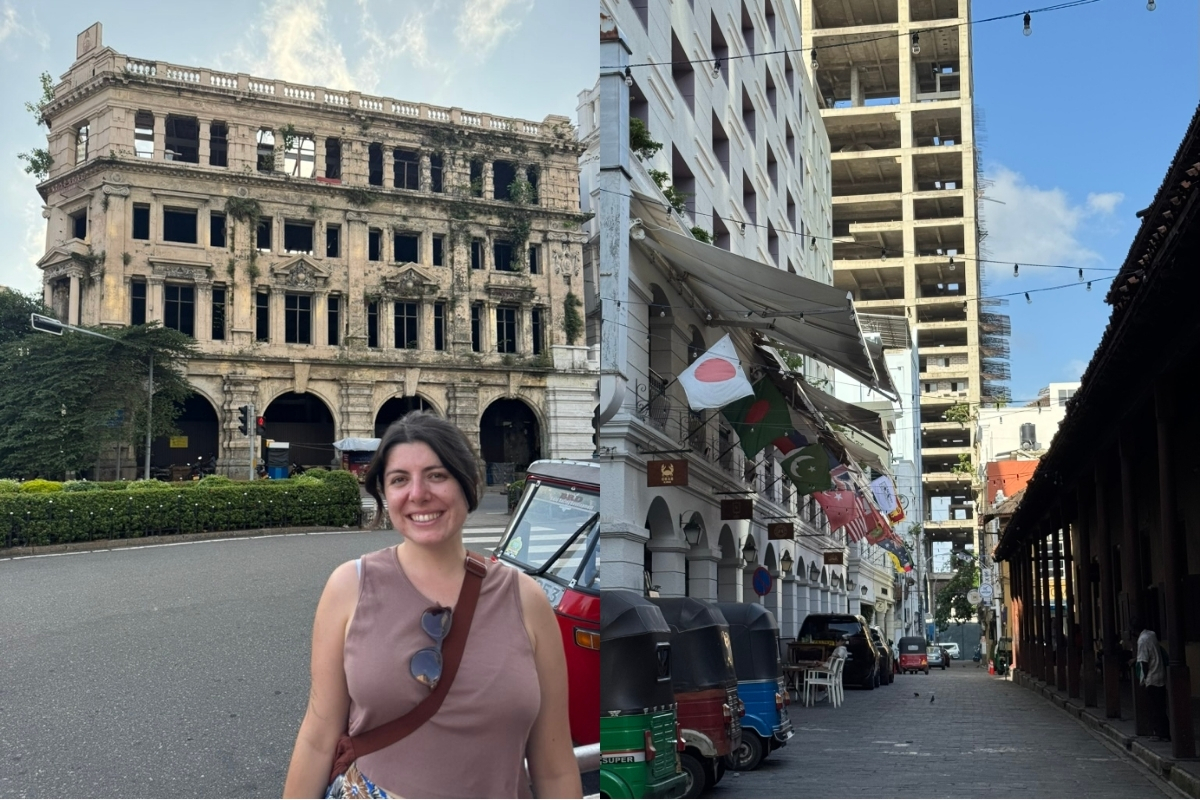
Today is our last day before a late-night international departure. We joined our expert resident host as he walked us through Colombo’s past and present and shared his vision for the city’s vibrant and bustling future.
Colombo was once a major hub along the historic spice trade routes. Its importance drew the Portuguese, Dutch, and British, who each left their mark on the city over centuries of colonial rule.
As we strolled through the historic Fort district, the commercial heart of Sri Lanka’s capital, we saw remnants of the city’s colonial past, including the 17th-century Dutch Hospital, British-era banks, and the city’s historic clock tower.
With this trip almost at its end, I found myself reflecting not only on the country’s colonial past but also on the more recent events that have shaped this resilient nation. From the civil war that ended in 2009 to the economic crisis of 2022 and the devastating impacts of Cyclone Ditwah in 2025, the resilience of its people shines through.
The people of Sri Lanka have high hopes for their capital, and through the eyes of our visionary guide, I could see why. Colombo is a city of beautiful architecture, walkable historic neighborhoods, and an exciting future ahead.
From temples and sites of great religious importance to incredible wildlife, rolling tea-covered hills, and flavorful cuisine, Sri Lanka offers something special for every traveler. I know I’ll carry the warmth of its people, the beauty of its landscapes, and the resilience of its story with me long after I return home.
Until next time, Sri Lanka!
Section Type: cta
Inspired to take your own Sri Lankan adventure? Browse our Private Sri Lanka Tours or speak to a Destination Expert to get started.











Copyright © 2026 SA Luxury Expeditions LLC, All rights reserved | 8 The Green, Suite A, Dover, DE, 19901 | 415-549-8049